Papyrus
Key Facts at a Glance
Papyrus was the most important writing material of the ancient world for thousands of years. Made from the papyrus plant, it shaped administration, religion, literature, and education, first in Ancient Egypt and later throughout the Mediterranean and the Roman Empire.
But what exactly is papyrus? How was it made? Why was it replaced by parchment, and why have some papyrus documents survived to this day? This page offers a well-founded overview of the plant, its production, its historical use, and its significance today.
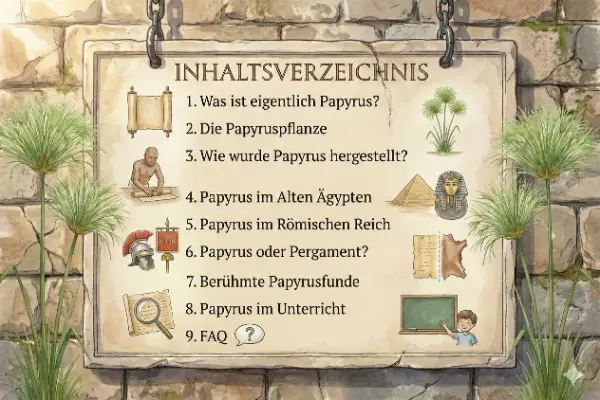
Table of Contents
What exactly is papyrus?
The papyrus plant
How was papyrus made?
Papyrus in Ancient Egypt
Papyrus in the Roman Empire
Papyrus or parchment?
Famous papyrus finds
Papyrus in the classroom
FAQ
What exactly is papyrus?
Of course, it is a plant, but papyrus is also a writing material of antiquity made from plant fibers. It was obtained from the pith of the papyrus plant, which grew especially in the Nile Delta. Unlike modern paper, papyrus is not based on ground cellulose fibers, but on overlapping strips of plant material that were pressed and dried.
Papyrus was the dominant writing medium from the 3rd millennium BC until Late Antiquity for administration, religion, education, and private correspondence.
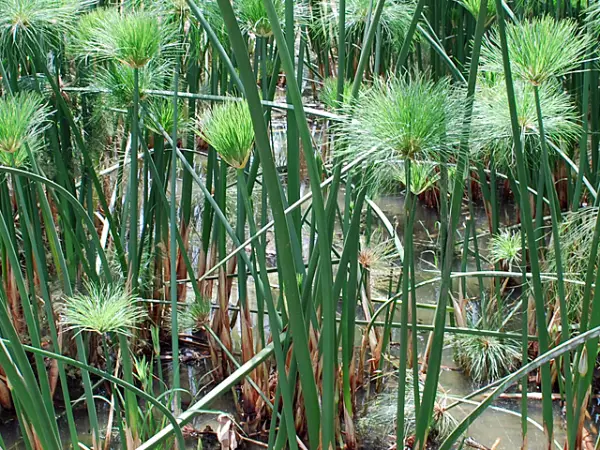
The Papyrus Plant – The Basis of Ancient Writing Material
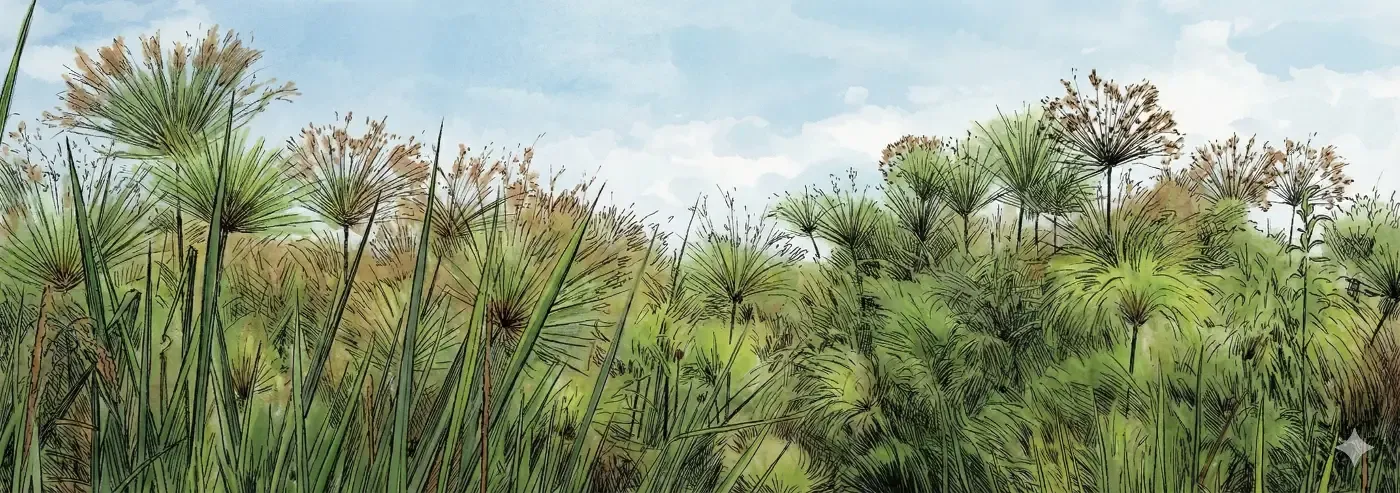
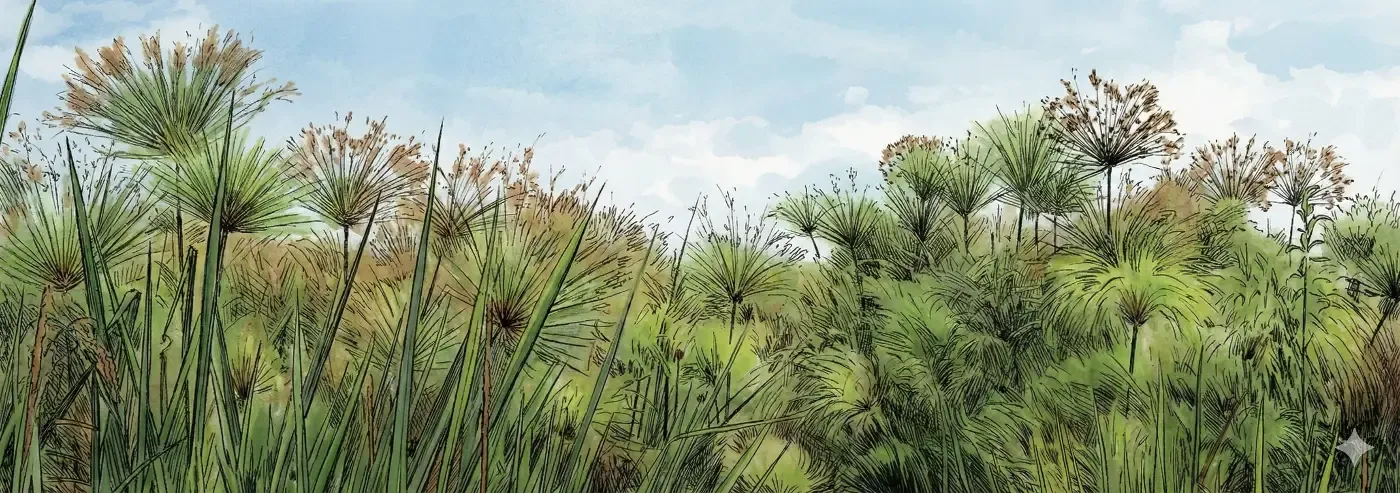
The papyrus plant (Cyperus papyrus) belongs to the sedge family. It can grow several meters high and has a triangular stem with a characteristic umbrella-shaped inflorescence.
For the production of writing material, the light-colored pith inside the stem was mainly used.
Its natural habitat was in wetlands, especially in the Nile Delta.
The combination of fresh water, nutrient-rich mud, and a warm climate encouraged dense growth, which was an important prerequisite for large-scale production.

How was papyrus made?
The production of papyrus followed a clear process that proved successful in antiquity. The goal was to create a smooth, writable surface from the plant pith that could be joined into scrolls.
Preparing the stems:
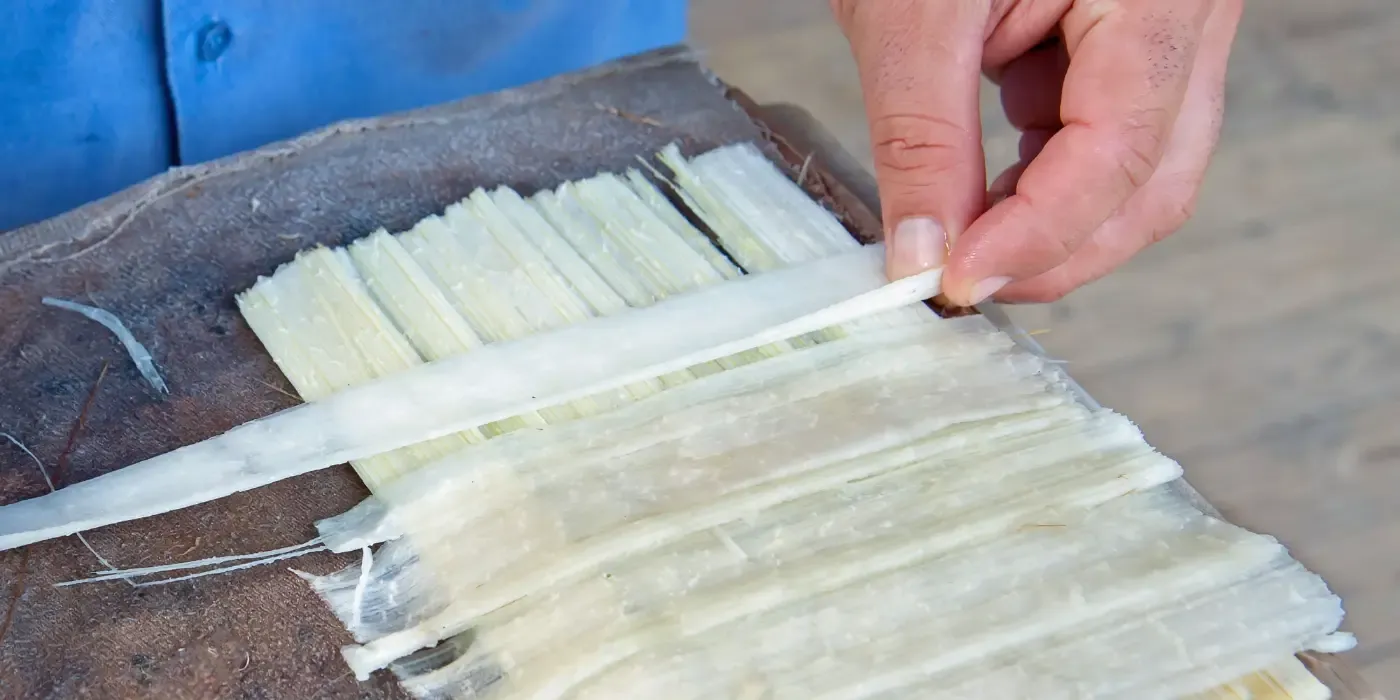
The outer rind was removed so that the light-colored pith was exposed.
Cutting the pith:
The pith was cut into long, thin strips.
Laying out the layers: One layer of strips was placed side by side; a second layer was laid across it at a right angle.
Pressing:
Pressure caused the strips to bond; plant sap acted as a natural adhesive.
Drying & smoothing: After drying, the surface was smoothed to make it easy to write on. Finished sheets were glued together into longer papyrus scrolls. These scrolls were usually written on in columns adapted to the way they were unrolled.
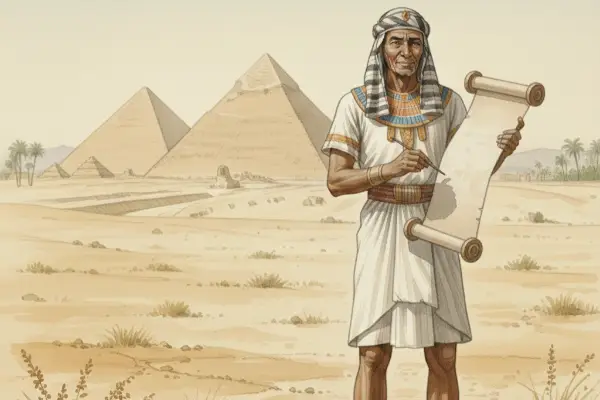
Papyrus in Ancient Egypt
In Ancient Egypt, papyrus was not only an everyday material but also a strategic raw material. Its production and distribution were often controlled, since papyrus was central to administration and religious texts.
Scribes used papyrus for tax lists, inventories, letters, and literary texts—in other words, for everything that needed to be recorded, organized, and passed on.
Papyrus also played a major role in religion: prayers, rituals, and funerary texts were written on papyrus scrolls. Papyrus was also important for long-distance trade, as it was in demand throughout the Mediterranean.
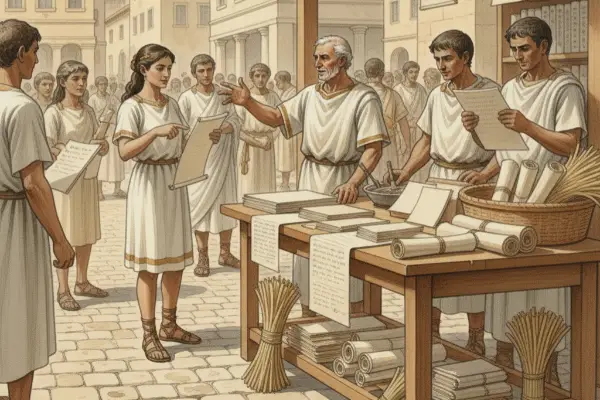
Papyrus in the Roman Empire
After Egypt was incorporated as a Roman province in 30 BC, papyrus became an important administrative material in the empire. In Roman authorities, in the military, and in everyday private life, papyrus was used for documents such as contracts, orders, registers, and letters.
Papyrus scrolls remained the standard for a long time before the codex (bound book form) became widespread. Especially in administration, a readily available writing material was a crucial factor in organizing such a vast empire.
Papyrus or Parchment – what is the difference?
Papyrus and parchment are both historical writing materials, but they differ fundamentally: papyrus is plant-based, while parchment is made from animal skin. This results in different properties in terms of durability, flexibility, and use.
| Feature | Papyrus | Parchment |
|---|---|---|
| Material | Plant pith (strips, pressed) | processed animal skin |
| Typical form | Scroll | often codex (book) |
| Durability | very good in dry environments | very durable, even in changing climates |
| Flexibility | rather brittle, especially in humidity | very flexible and robust |

Further important differences
One decisive advantage of parchment was that it could be written on on both sides. Papyrus was usually used on only one side, because the fiber direction on the back made writing more difficult. Parchment was therefore better suited to extensive texts in book form. In addition, parchment could be scraped and written on again. Such so-called palimpsests were especially common in the Middle Ages. Papyrus was much less reusable because its surface was more delicate.
Historical development in comparison
From the 3rd and 4th centuries AD onward, parchment gained importance in many regions of the Roman Empire. It was more durable, more resistant to moisture, and better suited to the codex, that is, the early book form. However, papyrus remained in use in Egypt and parts of the Mediterranean for a long time.
Famous papyrus finds
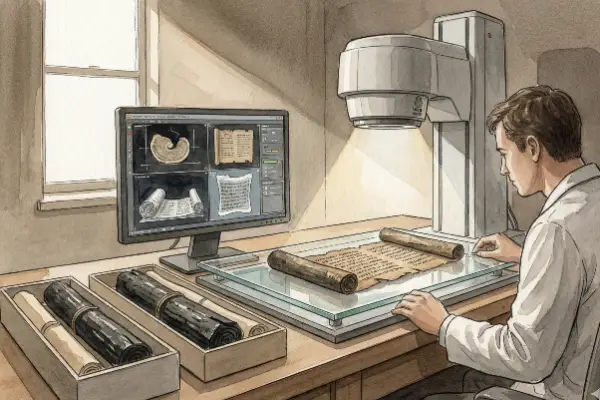
Sometimes it is pure chance that historical evidence survives. In Herculaneum, for example, charred scrolls were discovered that had been sealed in by the eruption of Vesuvius in AD 79. For centuries, they were considered unreadable.
Today, modern scanning techniques are making their texts visible again. Among the most important finds are also the Oxyrhynchus papyri from Egypt. Thousands of fragments tell of administration, literature, and ordinary everyday life. Such finds show how fragile papyrus actually is—and how extraordinary it is when it survives for millennia.
Papyrus in the classroom
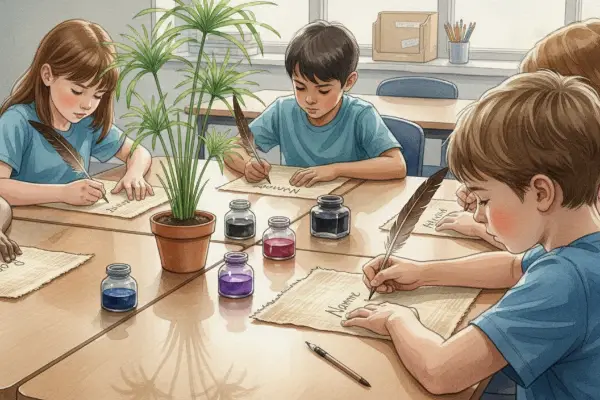
Papyrus is ideal for hands-on teaching phases because students can not only “read” ancient writing culture, but also experience it in practice. Short projects are particularly suitable, focusing on comparing materials, production steps, or writing with a reed pen.
Introduction: Difference between papyrus and modern paper (material sample, observation, hypotheses).
In-depth study: Production principle (crossing strips, pressing, drying as a model experiment).
Transfer: Why an empire needs writing (administration, trade, military).
FAQ
Is the papyrus plant winter-hardy?
Yes. With suitable ink and a writing tool (e.g. a reed pen), papyrus can be written on well. Dry storage is important.
How often do I need to water the papyrus plant?
Very frequently. Ideally, the pot should always stand in a saucer filled with water. The soil must never dry out completely, because the plant naturally grows in swampy areas.
Why is my papyrus plant not growing properly?
This is often due to too little light. The papyrus plant needs a very bright location with as much direct sun as possible. A lack of nutrients or a pot that is too small can also slow its growth.
Can a papyrus plant be propagated?
Yes, the easiest way is by dividing the rhizome. When repotting, the root ball can be carefully divided. Each section with healthy roots will then continue to grow as an independent plant.
Can a papyrus plant actually float?
Yes, at least indirectly. The spongy pith inside the stems contains many air-filled cells that provide buoyancy. In natural swamps, cut stems can therefore float on the water for a while. This characteristic also made the plant interesting in antiquity as a building material for light boats.
Sources
The Book in Antiquity, the Middle Ages, and Modern Times; Author (contribution): Jörg Graf; Year of publication: 2012; Publisher: Harrassowitz.
Cellulose (Original Research: Papyrus production revisited); Authors: Florian Bausch, Thomas Rosenau, Antje Potthast et al.; Year of publication: 2022; Publisher: Springer Nature.
Spectrum of Science (Article: The Paper of Antiquity); Author: Joachim Latacz; Year of publication: 2007; Publisher: Spektrum der Wissenschaft Verlagsgesellschaft.
Rudolphina – University of Vienna (Article: Papyri reveal everyday life in ancient society); Author: Bernhard Palme; Year of publication: 2023; Publisher: University of Vienna.
Papyrus (Teaching material/documentation); Author: Klaus-Peter Schäffel; Year of publication: 2011; Publisher: Self-published.
Last updated: February 21, 2026