Rings

What already annoyed Pliny about ring fashion

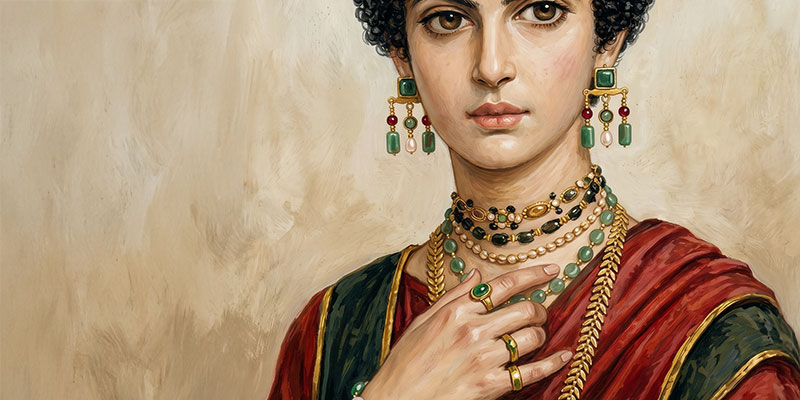
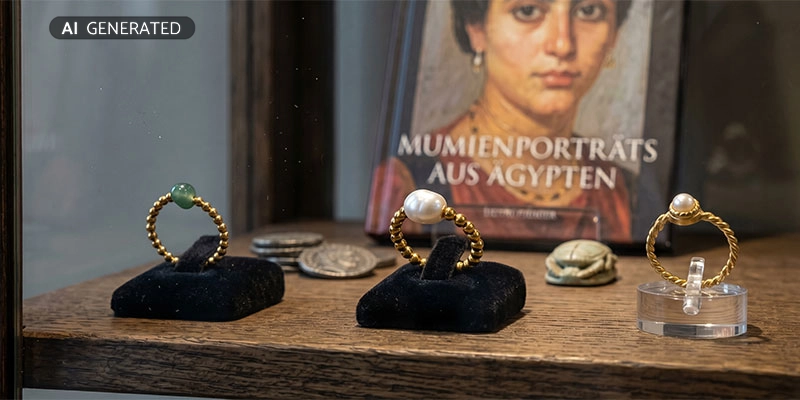
In the 1st century AD, rings were part of the standard wardrobe of Roman women from the urban middle class. Pliny the Elder noted with unmistakable irritation that the finger ring had changed from an aristocratic privilege into a piece of jewelry for everyone. It is precisely this democratized ring fashion that this collection represents: handcrafted brass rings with a granulated look, based on an original type from Pompeii. Genuine natural stone, real freshwater pearl.

  • Original type: Beaded ring based on examples from Pompeii, 1st century AD
  • Adjustable: fits various finger sizes
  • Real stones: green aventurine quartzite or white freshwater pearl.
  • Suitable as a gift: historically documented form with a story to tell.

If you are looking for a ring that comes with a story, you are in the right place.
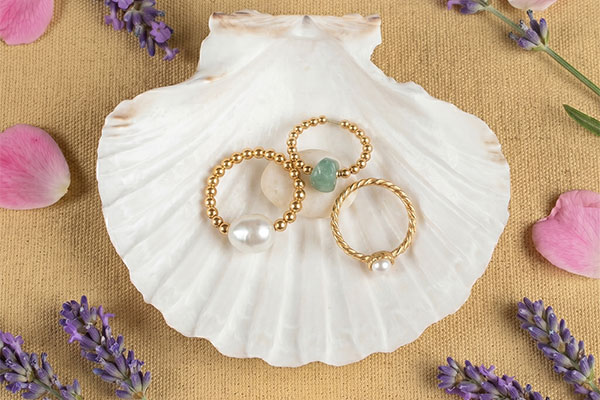
Drei römische Messingringe mit Aventurin und Süßwasserperle auf Naturleinen | Der Römer Shop


Items 1 - 3 of 3

Over 64.368 customers worldwide since 2001

Museums, schools and historical enthusiasts throughout Europe trust the products from Roman Shop.

Customer testimonials

 Eine Bewertung von Archäologischer Park Carnuntum
Archäologischer Park Carnuntum Austria

Young Roman friends can immerse themselves in the Roman past with numerous activities. Products from the Römer Shop are regularly and successfully used at this great event. Year after year, children of all ages can write on wax tablets and get to know real papyrus.

 Eine Bewertung von Scriptorium
Scriptorium Germany

The everyday equipment with glasses and ceramics is also really well made and has survived the hard life of a soldier well. In general, the range of products is truly sensational and offers unique products from the Roman era for many age groups and requirements, from hardcore legionnaires to little Roman fans of primary school age.

 Eine Bewertung von Dominikaner Museum
Dominikaner Museum Rottweil -Germany
Satisfied customers

The Dominikanermuseum Rottweil presents in its department "Roman Rottweil - Arae Flaviae" the life in the only Roman city in Baden-Wuerttemberg. We have been a customer of Römershop for a long time for our own museum shop and are convinced of the high and, above all, consistently high quality of the products. The entire team is always looking forward to new products and our shop is an attraction for our visitors thanks to good replicas.

 Eine Bewertung von Mathias S.
Mathias S. Deutschland

Hallo, ich wollte nur kurz ein feedback zur Lieferung geben; Also der „Asklepios“ ist wirklich großartig. Authentische Replik, unschlagbarer Preis. Vielen Dank dafür. Verpackung war auch vorbildlich.
Viele Grüße Matthias Semmler

 Eine Bewertung von Gemeinschaftsschule M. F.
Gemeinschaftsschule M. F. Mölln

Hello and thank you very much for the great products!

Our students were thrilled with the papyrus coloring pictures and the scarabs. As promised, I am sending you photos of the work with the coloring pictures. I wrote a review for the "scarab" coloring picture, but it can also be added to all the other pictures, since we had different motifs.

 Eine Bewertung von Centurio Markus N.
Centurio Markus N. Germany

The lovingly and authentically designed products from the Römer-Shop have been accompanying me for years and even decades in the field of ancient representation. As a centurion in a Roman military unit until a few years ago, the stationery, from wax tablets to papyrus scrolls, was extremely helpful for high-quality appearances and presentations at museum festivals, in reenactment and in museum education work.

 Eine Bewertung von Remo S.
Remo S. Schweiz

Salve Manuela, Im Anhang findest du den Lar und was ich aus ihm gemacht habe. Ich bin sehr zufrieden mit der Figur.
Cvra, vt valeas Remo

 Eine Bewertung von Dr. Reinhard S.
Dr. Reinhard S. Deutschland

Sehr geehrtes Römer-Shop Team, wie immer:
--schnelle und prompte Lieferung
--qualitativ hochwertige Ware
--volle Identität mit der Abbildung der Produkte
--sehr gutes Preis-Leistungsverhältnis
--umfassendes Angebot Vielen Dank. Weiter so. Salvete Reinhard

 Eine Bewertung von Torsten B.
Torsten B. Deutschland

SALVE , Manuela und Andreas mit Team,
ich möchte meine Bewertung in Reimform darbringen:
Die Trinkgefäße und der Wein, sollten ein Geschenk für meine Eltern sein. Was soll ich sagen-Ihr lieben Leut, es hat beide sehr erfreut!
Sonnige Grüße Torsten

 Eine Bewertung von Papa Ralf & Sohn
Papa Ralf & Sohn Germany

The card is easy to work with and the cardboard is sturdy enough for such projects. Perhaps small cast figures and horses on a plastic base would be a useful addition to the shop, rather than the cardboard pictures. My 12-year-old son had fun making something like that

 Eine Bewertung von Centurio Zoltan
Centurio Zoltan Hungary

Dear Manuela and Andreas!

Thank you very much for everything and your help. The package arrived here safe and sound and complete. I am very, very satisfied with every product and I really like every item. Since I am constantly expanding my Roman collection, I would like to buy from you in the future if possible Thank you again for everything and see you next time.
Kind regards from Hungary: Zoltan

 Eine Bewertung von Norbert H.
Norbert H. Germany

Here is one of the results of your mosaic stones. The Beyenburg coat of arms, 70 x 70 cm.
Regards
Norbert

From the Etruscan workshop fire to a Pompeian jewelry box

Granulation technique in detail: Pompeii ring with green aventurine cabochon on wood | Der Römer Shop

Granulation – a technique already mastered by the Etruscans

Who invented the trick of placing tiny gold beads on a ring in such a way that no soldering seam remains visible? The answer leads to Etruria, in the 7th century BC. In the workshops of Cerveteri and Vetulonia, goldsmiths melted tiny droplets from gold filings, caught them on charcoal dust and attached them to ring bands, pendants and bracelets.
The Romans adopted the technique, simplified it for mass production in bronze and brass and brought it to every market stall in the imperial capital during the early Empire. What began as the sacred craftsmanship of the Etruscan nobility became everyday jewelry for the Roman middle class.

A jewelry box from Pompeii tells its own story

In the buried houses of Pompeii – for example in the Casa del Menandro – archaeologists of the 19th and 20th centuries repeatedly found the same thing: small wooden boxes with charred remains, in which a woman’s remnants of gold, bronze rings, beads and gemstones had been kept. This was the typical inventory of a middle-class household. Granulated bead rings with cabochon stones were part of the standard equipment. They were not luxury items, but natural everyday jewelry, worn by merchants’ wives, freedwomen and Romanized provincial women.
While Pliny the Elder sat at his writing desk in Misenum lamenting the decline of old morals, the women of his city continued to wear their rings undisturbed. The myth of the gold ring as a senatorial privilege had long since become history by his time: the ius anuli aurei, once indeed an aristocratic right of the Republic, had been expanded so extensively under Emperors Tiberius and Claudius that practically every respectable citizen could lay claim to it. The rings in this collection pick up precisely this fashion: not senatorial gold, but the affordable bead ring of the Pompeian middle class.

Three Rings, One Story


Rings, all made of brass, all connected to the 1st century AD. This focus is no coincidence, but a strength. Anyone buying here receives pieces of jewelry that belong together – in form, history, and color. The two Pompeii variants share the same shape and find context and differ only in the stone. They can be worn individually, combined in pairs, or presented together as a small collection.

  • Genuine natural stone: green aventurine quartzite or white freshwater pearl, no plastic.
  • Documented ring type: granulated beaded hoop from the Pompeii find context, 1st century AD.
  • Adjustable: open hoop, fits different finger sizes.
  • Suitable as a set: two Pompeii variants share the same shape and differ only in the stone.

Particularly suitable as a gift. The aventurine ring is a colorful eye-catcher for younger recipients or for anyone who loves rich green. The Pompeii pearl ring is the understated version: subtle, classic, and always appropriate. The Servilia ring with pearl is the elegant version, slightly more refined, slightly more striking, and ideal for special occasions. Anyone looking for a gift for a Latin teacher, a history student, or a family member with an appreciation for jewelry — a gift that has something to tell — will find here a selection with history.

Rings that belong together like chapters of the same book.

Pompeji-Ring-Set: Aventurin und Süßwasserperle in identischer Kugelreif-Form | Der Römer Shop
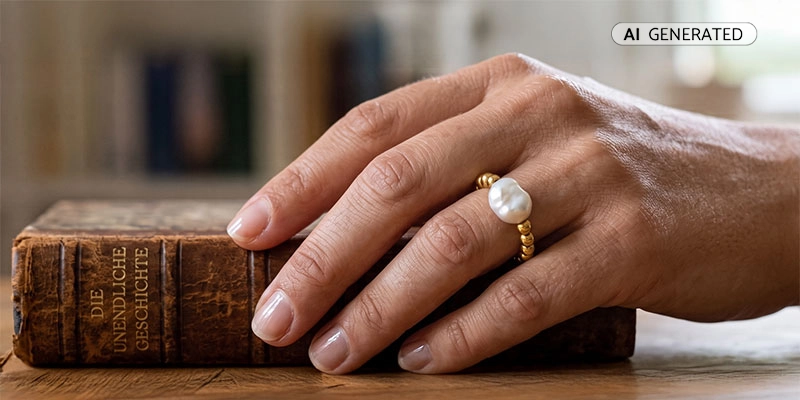
Hand mit Pompeji-Aventurin-Ring auf einem aufgeschlagenen Buch im Tageslicht | Der Römer Shop

Who might this ring mean something to?


Sometimes, a piece of jewelry immediately makes you think of a particular person. With the Pompeii ring, it is often the same ones: the Latin teacher with the clever sense of humor. The friend who travels to Italy every year and is interested in the history behind the stones. The mother who reads ancient literature but rarely owns jewelry with a story. The daughter who has just completed her first Cicero translation.


Or perhaps for yourself?

Sometimes the answer is closer than expected. Perhaps for someone who does not want to experience ancient culture only in books, but wants to carry a small piece of it with them. Or for someone whose jewelry drawer is full of pieces that all come from the same season and who is looking for something that is older than any fashion trend.


If a name came to mind while reading this, the ring has already found a finger.

Your advantages

Forum Traiani trademark

Our registered own brand that stands for local and social production

20 years of experience

Large archäological network and collaboration with schools and museums.

Buying on account
Buying on account

For schools, authorities and private customers (Paypal service)

Sustainable packaging

We recycle our suppliers' cardboard packaging and give every cardboard box a second life.

General questions

You will find the most important answers in the FAQs. Can't find your answer? No problem: write to us!

Questions about our store?

How fast is the shiping?
Can I also order on account?
Do we support X-Invoices and Route IDs?
Does the Roman Shop also supply to traders and museums?
Returns
Andreas und Manu vom Römer Shop

From Glauberg to Hollywood...

Our boundless passion for antiquity

We believe that history is not only to be found in books or museums, but that it is should be brought to life and experienced across all borders.

By offering Roman replicas and other antique products, we want to bring this bring this fascinating time to life and give people around the world the opportunity to put themselves themselves into it.

Our products help to ensure that history is not just a collection of facts but becomes an eventful and unforgettable adventure.

Produced, assembled, picked, packed and on its way. This is how our products from Glauberg on their journey to your home. Into the classrooms of your children, the shelves of museum stores to the big movie sets in Hollywood...!

With the Römer Shop you can...
Touch, see, smell and experience history.


About us and how it all began
Insta Romanum
Insta Romanum

Experience history visually –
Veni, vidi, click! I came, I saw, I followed.

Roman encyclopaedia
Roman encyclopaedia

Background information, tips and facts about ancient Rome. Ancient knowledge simply explained!

An empire worth exploring

History, craft ideas and Roman knowledge in HD instead of wax tablets. Get the popcorn ready and put on your tunics!

Forum Romanum 2.0
Forum Romanum 2.0

Like, post, follow – just like the Romans in the Senate! Here, history isn't just told – it's shared.