Ketten & Armreifen

Halsschmuck und Armschmuck der antiken Welt

Das Sortiment versammelt diese Bandbreite an einer Stelle: römische Colliers mit Naturstein, germanische Spiralreifen aus Eisen, Wikinger-Bronze, ägyptische Skarabäus-Anhänger. Was sie verbindet, ist eine klare antike Vorbildform – kein erfundenes Antik-Design, sondern Stücke nach belegten Funden und Traditionen.

  • Liegt auf Anhieb gut: verstellbare Verschlüsse passen zur Halsweite
  • Kombinierbar: Ketten und Armreifen lassen sich übereinander tragen
  • Kulturell zuordenbar: Materialien und Formen lassen Epoche erkennen
  • Sauber verarbeitet: solide Handarbeit, dauerhafter Tragekomfort

Eine Kette macht aus einer Tracht eine Darstellung.
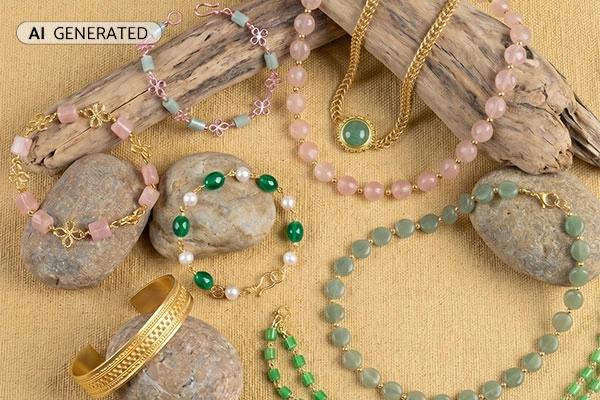
Antike Replikate und Bastelspaß in der Schule | Der Römer Shop

Roman Necklaces & Earrings

The fascination of Roman jewellery has not diminished in today's fashion consciousness, even after 2000 years.


Discreet, elegant accents

925 sterling silver wire links are formed into eyelets for the delicate link chains, which are strung with alternating pearls and coloured glass stones. Simple and unobtrusive, but with a powerful statement, these necklaces adorned the necks of Roman women. On a simple dress, in the collar of a blouse or on a shirt with a neckline, they add a very special touch. The ring eyes close with a filigree silver hook clasp. Red stones give the necklaces the sparkle of rubies, while green or purple stones add a touch of colour.

Lunula for sensuality

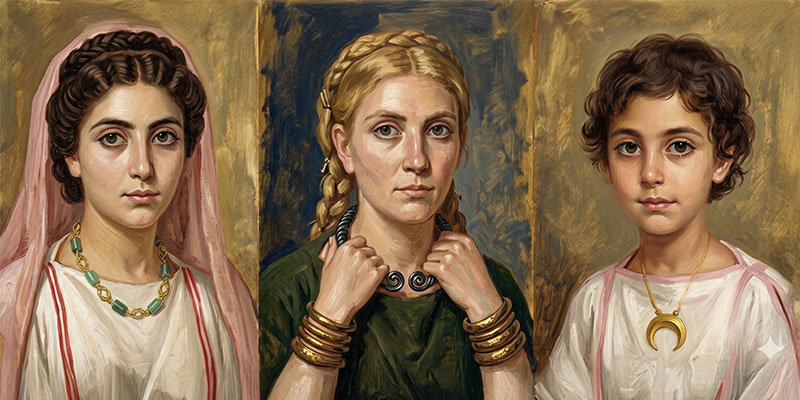
This double-loop necklace is inspired by a gold chain found in Pompeii. It is both sophisticated and simple. Aventurine beads add sparkle and freshwater pearls make it a piece that will complement any outfit or occasion. The lunula pendant is typical of the period after the 1st century AD. Each link of the chain is individually soldered, adding a touch of class to the jewellery. The beautifully shaped and filigree Crescent Moon pendant is also unique. A symbol of the goddess Luna, the pendant wards off evil and represents sensuality, creativity and intuition. The original can be seen in the National Museum in Naples.

Good luck and timeless fashion in the pendant

Pendants were also popular with the Romans. Whether on a silver or gold chain, or even on a simple leather strap, mars, luna, pelta or ornamental pendants were worn on all occasions - and as lucky charms, of course! The apple in the hand, for example, signified feminine beauty. But the filigree pendants, inspired by the art of Roman provincial goldsmiths, were also beautifully crafted. The beauty and simplicity of the necklaces, pendants and earrings inspire a sense of fashion rooted in ancient tradition, yet utterly modern and timeless.

Necklaces and earrings

Necklaces in particular have a long tradition, usually accompanied by matching earrings. Discreet, very delicate link necklaces were very popular with Roman women. According to a find from southern Russia dating from the 1st/2nd century AD, the original link necklaces were handmade by goldsmiths in Germany. They invite you to shop for jewellery in the necklaces and earrings section.
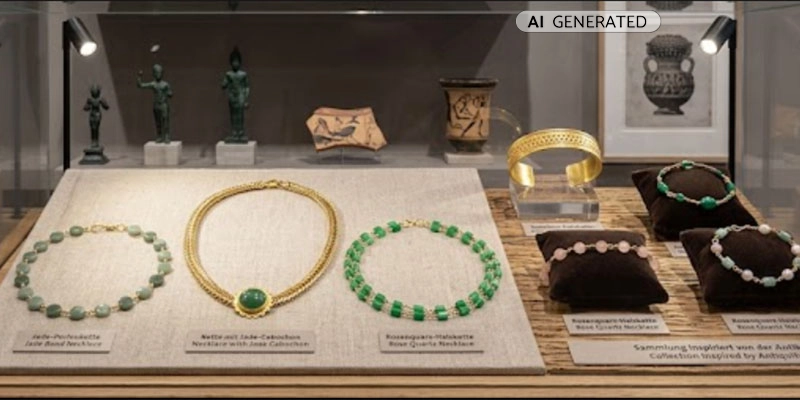
Items 1 - 25 of 25

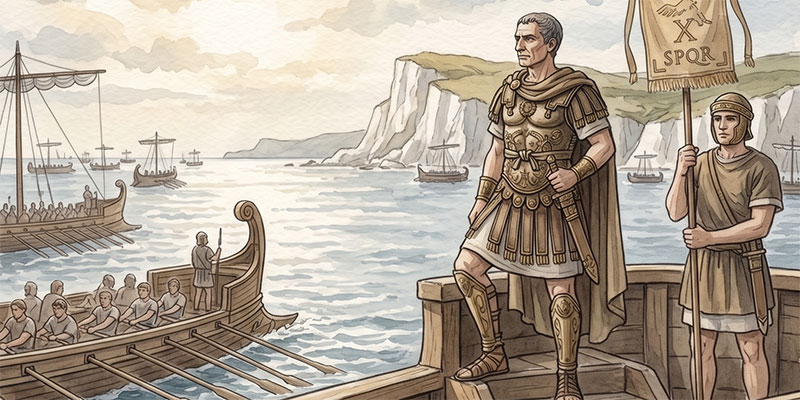
Hat Caesar Britannien wegen der Perlen erobert?

Römische Kette mit Süßwasserperlen vor Karte des Britannien-Feldzugs | Der Römer Shop

Sueton schrieb gut hundertfünfzig Jahre nach den Ereignissen einen Satz, der seitdem die Caesar-Biografie würzt: Caesar habe Britannien überfallen, weil er es auf die dortigen Perlen abgesehen hatte. Sueton, Vita Iulii 47. Stimmt das?

Es stimmt nur halb. Britannien hatte tatsächlich Süßwasserperlen, Plinius bestätigt das in seiner Naturalis Historia. Sie waren kleiner und matter als die berühmten Perlen aus dem Persischen Golf, aber sie existierten. Und Caesar brachte einige nach Rom mit. Eine widmete er der Venus Genetrix in ihrem Tempel. Aber den Feldzug von 55 und 54 v. Chr. erklärt das nicht. Die wirklichen Gründe waren strategisch: keltische Stämme aus Britannien hatten gallische Aufstände gegen Caesar unterstützt. Wer gegen Rom rebellierte, sollte spüren, dass Rom auch über das Meer kam.

Warum sich der Mythos hartnäckig hält

Der Perlen-Satz bei Sueton ist erzählerisch zu gut, um ihn fallenzulassen: ein Welteroberer, der wegen Schmuck eine Insel überfällt. Doch er passt zu einem größeren Muster römischer Sozialkritik: Plinius, Tacitus und andere klagen regelmäßig, Eroberungen würden aus Habgier geführt, nicht aus Staatsräson. Die Perlen aus Britannien waren ein willkommenes Symbol dafür. Im Sortiment finden sich Süßwasserperlen auf mehreren Stücken, sie kamen in der Kaiserzeit nicht mehr aus Britannien, sondern aus Flusssystemen im ganzen Reich. Aber das Bild der ersten römischen Perlen aus dem Norden hängt ihnen bis heute an.

Für welche Darstellung passt welches Stück?


Die Kategorie deckt verschiedene Darstellungen ab, jede mit eigenem Schmuckverständnis. Wer welches Stück braucht, hängt von der Epoche, der Region und der Lebensphase der dargestellten Frau ab.

  • Reenactorinnen der früher Kaiserzeit: greift zur Lunula-Kette, zum Pompeji-Armband und zur Drahtgliederkette als Standard-Halsschmuck einer freigeborenen Frau
  • Darstellerin im germanischen Umfeld: braucht den eisernen Spiralreif oder die Bronze-Kette nordischer Bauart, schlichter im Material
  • Spätrömische oder provinziale Darstellung: profitiert von den hochwertigen Colliers Felicitas, Octavia und Valeria, die in mittlere bis späte Kaiserzeit passen
  • Living-History-Programm: kombiniert Lunula (Mädchen), Herkulesknoten (Braut) und Drahtgliederkette (Frau), um die Lebensphasen einer Römerin sichtbar zu machen

Ein Schmuckstück macht keine Darstellung – eine bewusste Auswahl schon.

Antike Replikate und Bastelspaß in der Schule | Der Römer Shop

Wo darf so ein Stück hin, außer auf eine Reenactor-Veranstaltung?


Ketten und Armreifen aus dieser Kategorie sind nicht nur für den großen Lager-Auftritt gedacht. Sie funktionieren in einer Reihe von Situationen, an die man beim Kauf nicht zuerst denkt.

Im Museum oder bei Living-History-Stationen werden sie zum greifbaren Anschauungsstück, das Besucher in die Hand nehmen dürfen – Schmuck wirkt anders, wenn er gewogen wird. Im Lateinunterricht oder Geschichtsunterricht funktioniert eine Lunula oder ein Pompeji-Armband als haptisches Mitbringsel zur Pompeji-Stunde, zur Hochzeitsritual-Lektion oder zum Caesar-Britannien-Kapitel. Bei einem antiken Themenabend mit Freunden – Cicero-Lesung, Petronius-Übersetzung, römisches Abendessen nach Apicius – liefert ein Stück die unaufdringliche Atmosphäre, ohne dass jemand verkleidet kommen müsste. Auch in Foto- oder Filmproduktionen sind solche Stücke gefragt, weil Buch-Cover und Verlagsfotografien authentische Stücke statt Fantasiekostüme brauchen. Und im eigenen Schmuckkästchen-Archiv wächst über Jahre eine kleine Sammlung, die Lebensphasen einer antiken Frau dokumentiert.

Ein Stück mit Vergangenheit passt überall dorthin, wo Geschichte berührbar werden soll.

Your advantages

Forum Traiani trademark

Our registered own brand that stands for local and social production

20 years of experience

Large archäological network and collaboration with schools and museums.

Buying on account
Buying on account

For schools, authorities and private customers (Paypal service)

Sustainable packaging

We recycle our suppliers' cardboard packaging and give every cardboard box a second life.

General questions

You will find the most important answers in the FAQs. Can't find your answer? No problem: write to us!

Questions about our store?

How fast is the shiping?
Can I also order on account?
Do we support X-Invoices and Route IDs?
Does the Roman Shop also supply to traders and museums?
Returns
Andreas und Manu vom Römer Shop

From Glauberg to Hollywood...

Our boundless passion for antiquity

We believe that history is not only to be found in books or museums, but that it is should be brought to life and experienced across all borders.

By offering Roman replicas and other antique products, we want to bring this bring this fascinating time to life and give people around the world the opportunity to put themselves themselves into it.

Our products help to ensure that history is not just a collection of facts but becomes an eventful and unforgettable adventure.

Produced, assembled, picked, packed and on its way. This is how our products from Glauberg on their journey to your home. Into the classrooms of your children, the shelves of museum stores to the big movie sets in Hollywood...!

With the Römer Shop you can...
Touch, see, smell and experience history.


About us and how it all began
Insta Romanum
Insta Romanum

Experience history visually –
Veni, vidi, click! I came, I saw, I followed.

Roman encyclopaedia
Roman encyclopaedia

Background information, tips and facts about ancient Rome. Ancient knowledge simply explained!

An empire worth exploring

History, craft ideas and Roman knowledge in HD instead of wax tablets. Get the popcorn ready and put on your tunics!

Forum Romanum 2.0
Forum Romanum 2.0

Like, post, follow – just like the Romans in the Senate! Here, history isn't just told – it's shared.