Römische Ohrringe

Inaures aus dem Imperium fürs eigene Ohr

Römische Ohrringe, lateinisch inaures, sind antike Ohrhänger und Ohrstecker des Imperium Romanum. Getragen wurden sie schwerpunktmäßig vom 1. bis 3. Jahrhundert n. Chr. Typische Materialien sind Gold, Silber und Messing, kombiniert mit Perlen, Smaragden oder Glaspaste. Verbreitete Formen sind der Discus-Typ (Halbkugel-Stecker), Crotalia (Klapper-Hänger) und der Stalagmium-Typ (tropfenförmige Gehänge).

  • Authentische Repliken: Discus- und Crotalia-Formen nach Originalfunden
  • Belegte Materialien: Messing teils vergoldet und echter Naturstein
  • Datierung: 1. bis 3. Jh. n. Chr., frühe Kaiserzeit bis Severerzeit
  • Tragefähig: für Living History gefertigt, nicht nur fürs Vitrinen-Display

Modelle nach römischen Vorbildern, gefertigt nach archäologischen Vorlagen aus Pompeji, Herculaneum und den Nordwestprovinzen.
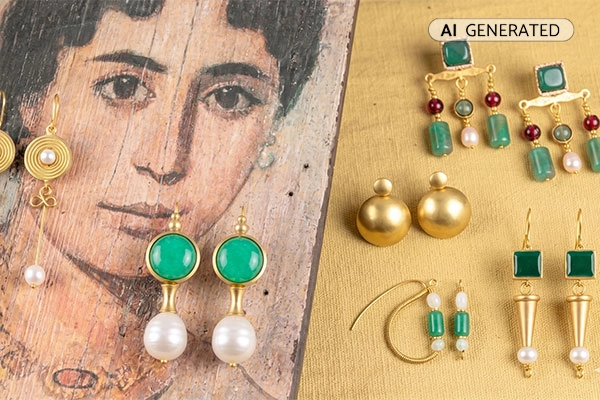
Fayum-Mumienporträt mit römischen Ohrring-Repliken Inaures Crotalia Stalagmium | Der Römer Shop


Items 1 - 11 of 11

Over 64.368 customers worldwide since 2001

Museums, schools and historical enthusiasts throughout Europe trust the products from Roman Shop.

Customer testimonials

 Eine Bewertung von Archäologischer Park Carnuntum
Archäologischer Park Carnuntum Austria

Young Roman friends can immerse themselves in the Roman past with numerous activities. Products from the Römer Shop are regularly and successfully used at this great event. Year after year, children of all ages can write on wax tablets and get to know real papyrus.

 Eine Bewertung von Scriptorium
Scriptorium Germany

The everyday equipment with glasses and ceramics is also really well made and has survived the hard life of a soldier well. In general, the range of products is truly sensational and offers unique products from the Roman era for many age groups and requirements, from hardcore legionnaires to little Roman fans of primary school age.

 Eine Bewertung von Dominikaner Museum
Dominikaner Museum Rottweil -Germany
Satisfied customers

The Dominikanermuseum Rottweil presents in its department "Roman Rottweil - Arae Flaviae" the life in the only Roman city in Baden-Wuerttemberg. We have been a customer of Römershop for a long time for our own museum shop and are convinced of the high and, above all, consistently high quality of the products. The entire team is always looking forward to new products and our shop is an attraction for our visitors thanks to good replicas.

 Eine Bewertung von Mathias S.
Mathias S. Deutschland

Hallo, ich wollte nur kurz ein feedback zur Lieferung geben; Also der „Asklepios“ ist wirklich großartig. Authentische Replik, unschlagbarer Preis. Vielen Dank dafür. Verpackung war auch vorbildlich.
Viele Grüße Matthias Semmler

 Eine Bewertung von Gemeinschaftsschule M. F.
Gemeinschaftsschule M. F. Mölln

Hello and thank you very much for the great products!

Our students were thrilled with the papyrus coloring pictures and the scarabs. As promised, I am sending you photos of the work with the coloring pictures. I wrote a review for the "scarab" coloring picture, but it can also be added to all the other pictures, since we had different motifs.

 Eine Bewertung von Centurio Markus N.
Centurio Markus N. Germany

The lovingly and authentically designed products from the Römer-Shop have been accompanying me for years and even decades in the field of ancient representation. As a centurion in a Roman military unit until a few years ago, the stationery, from wax tablets to papyrus scrolls, was extremely helpful for high-quality appearances and presentations at museum festivals, in reenactment and in museum education work.

 Eine Bewertung von Remo S.
Remo S. Schweiz

Salve Manuela, Im Anhang findest du den Lar und was ich aus ihm gemacht habe. Ich bin sehr zufrieden mit der Figur.
Cvra, vt valeas Remo

 Eine Bewertung von Dr. Reinhard S.
Dr. Reinhard S. Deutschland

Sehr geehrtes Römer-Shop Team, wie immer:
--schnelle und prompte Lieferung
--qualitativ hochwertige Ware
--volle Identität mit der Abbildung der Produkte
--sehr gutes Preis-Leistungsverhältnis
--umfassendes Angebot Vielen Dank. Weiter so. Salvete Reinhard

 Eine Bewertung von Torsten B.
Torsten B. Deutschland

SALVE , Manuela und Andreas mit Team,
ich möchte meine Bewertung in Reimform darbringen:
Die Trinkgefäße und der Wein, sollten ein Geschenk für meine Eltern sein. Was soll ich sagen-Ihr lieben Leut, es hat beide sehr erfreut!
Sonnige Grüße Torsten

 Eine Bewertung von Papa Ralf & Sohn
Papa Ralf & Sohn Germany

The card is easy to work with and the cardboard is sturdy enough for such projects. Perhaps small cast figures and horses on a plastic base would be a useful addition to the shop, rather than the cardboard pictures. My 12-year-old son had fun making something like that

 Eine Bewertung von Centurio Zoltan
Centurio Zoltan Hungary

Dear Manuela and Andreas!

Thank you very much for everything and your help. The package arrived here safe and sound and complete. I am very, very satisfied with every product and I really like every item. Since I am constantly expanding my Roman collection, I would like to buy from you in the future if possible Thank you again for everything and see you next time.
Kind regards from Hungary: Zoltan

 Eine Bewertung von Norbert H.
Norbert H. Germany

Here is one of the results of your mosaic stones. The Beyenburg coat of arms, 70 x 70 cm.
Regards
Norbert

Klimperklang & Klassendünkel: Was römische Ohrringe wirklich erzählen

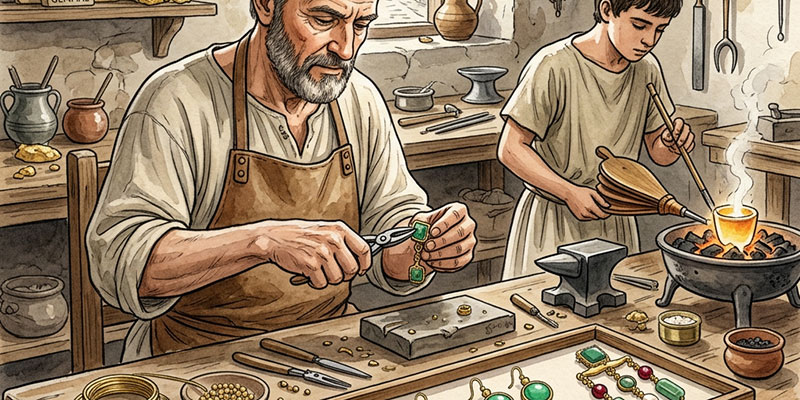
Römischer Goldschmied fertigt Inaures mit Lehrling in antiker Werkstatt | Der Römer Shop

Inaures, Crotalia, Stalagmium: der Sound des Imperiums

Wussten sie, dass römische Ohrringe nicht nur glänzten, sondern auch klangen? Plinius der Ältere prägte für die kostbaren Perl-Hänger den Begriff crotalia, also „Klappern". Beim Gehen erzeugten die margaritae, Süßwasserperlen aus Britannien oder Perlen vom Persischen Golf, einen feinen Ton. Diese inaures waren mehr als Schmuck. Sie waren akustische Statussymbole.
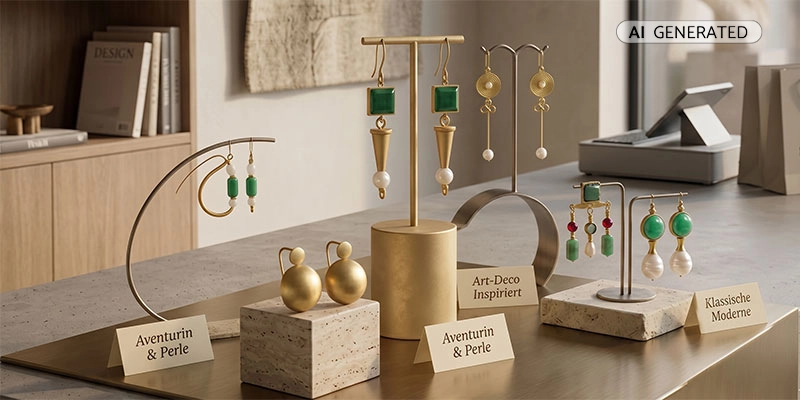
Die Formen waren klar definiert. Der Discus-Typ ist ein halbkugelförmiger Ohrstecker aus dünnem Goldblech, oft mit Granulation verziert. Der Stalagmium-Typ dagegen zeigt tropfen- oder traubenförmige Gehänge, häufig mit Smaragden aus dem Mons Smaragdus in Ägypten. Funde aus Pompeji und Herculaneum belegen ab dem 1. Jh. n. Chr. eine erstaunliche Vielfalt. Erhaltene Schmuckhorte aus dem Vesuvgebiet, etwa aus der Casa del Menandro, dokumentieren das Niveau kaiserzeitlicher Goldschmiedekunst.

Mythos „Männerohrringe waren in Rom undenkbar"

Der Mythos hält sich hartnäckig: Echte römische Männer trugen keine Ohrringe. Stimmt nur halb. Im stadtrömischen Mainstream galten Ohrringe für Männer tatsächlich als „orientalisch" oder „weichlich". Iuvenal polemisierte in seinen Satiren gegen geschmückte Senatorensöhne. In den östlichen Provinzen trugen Männer durchaus Ohrringe, belegt durch Mumienporträts aus dem Fayum und parthische Statuen aus Hatra. Auch Knaben bekamen mancherorts früh ein einzelnes Ohrloch.
Die berühmteste Trägerin war Lollia Paulina, dritte Frau Caligulas. Plinius berichtet, sie sei mit Schmuck im Wert von 40 Millionen Sesterzen zum Verlobungsessen erschienen. Smaragde, Perlen, Granate, alles dokumentiert. Solche Exzesse erklären, warum die Lex Oppia (215 v. Chr.) den Schmuckluxus zeitweise gesetzlich begrenzte. Die Aufhebung 195 v. Chr. wurde von Frauen erfolgreich erkämpft. Die Ohrring-Geschichte ist also auch eine politische.

Warum diese Repliken im Ohr und in der Vitrine bestehen


Wer römische Ohrringe kauft, erwirbt zwei Dinge gleichzeitig: ein tragbares Stück Antike und ein dokumentiertes Objekt mit klarer historischer Linie. Jedes Modell dieser Kategorie folgt einem konkreten archäologischen Vorbild. Das Ergebnis sind Schmuckstücke, die auf der Reenactment-Veranstaltung ebenso funktionieren wie im Alltag.

  • Archäologisch fundiert: Originale aus Pompeji, Herculaneum oder Provinzgräbern, keine Fantasie-Designs
  • Hautfreundlich verarbeitet: Messing-Ohrhaken und polierte Lötstellen für Langzeit-Tragekomfort
  • Reenactment-tauglich gefertigt: Stabil für Living-History-Einsätze, leicht für ganze Veranstaltungstage
  • Geschenkwert mit Substanz: Statt austauschbarem Schmuck ein Stück Geschichte mit Hintergrund
Die Modelle tragen klassische römische Frauennamen wie Aurelia, Calpurnia, Lucilla oder Vesta. Diese Benennung ist eine bewusste Hommage an die Trägerinnen der Kaiserzeit und macht jedes Modell unverwechselbar.

Wer eine Aurelia trägt, trägt damit einen Namen, der schon vor 2000 Jahren in Rom geläufig war.

Römische Ohrringe Repliken Aventurin Perle Discus Stalagmium Sortiment | Der Römer Shop
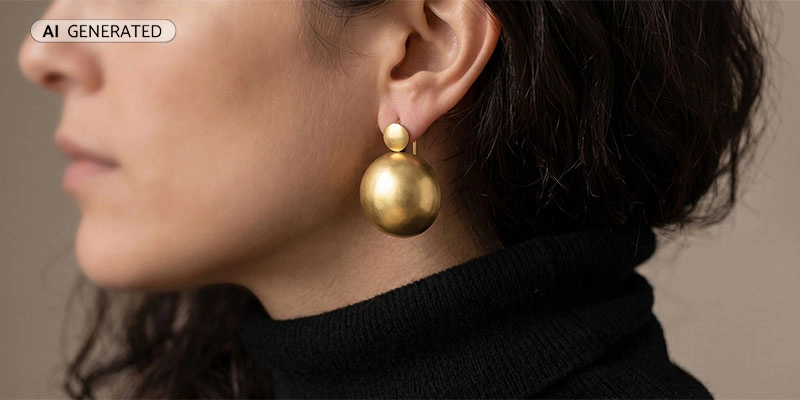
Goldener römischer Discus-Ohrring zum schwarzen Rollkragen modern getragen | Der Römer Shop

Sind diese Ohrringe etwas für sie? Hier ist der ehrliche Selbsttest


Ein Stück antiker Schmuck steht und fällt mit dem Anlass. Damit sie nicht raten müssen, hier die fünf Situationen, in denen diese Ohrringe wirklich aufgehen. Vielleicht sind sie Living history Darstellerin und brauchen Schmuck, der zur Stola passt und einen ganzen Veranstaltungstag durchhält, ohne zu drücken. Oder sie suchen ein Geschenk mit Substanz für jemanden, der bereits drei Schmuckschachteln besitzt, dann kommt hier etwas, das niemand sonst trägt. Wenn sie Latein oder Geschichte unterrichten und wollen ein haptisches Objekt, das den Unterricht aus der Theorie holt. Oder sie lieben minimalistisches Design und entdecken, dass der Discus-Stecker formal näher an der Moderne liegt als am Boho Style. Und schließlich: vielleicht sammeln sie Antiken-Repliken und brauchen ein dokumentiertes Stück mit klarer Datierung.

Der unerwartete Aha-Moment

Was niemand erwartet: Diese Ohrringe funktionieren auch zur Jeans. Ein schlichter Goldscheiben-Stecker neben einem weißen Hemd wirkt nicht „verkleidet", sondern überraschend zeitlos. Der Grund ist einfach: Römische Goldschmiede arbeiteten mit Proportionen, die das menschliche Gesicht seit 2000 Jahren schmeicheln. Wer einmal eine Aurelia oder Vesta beim Kaffee mit Freunden trägt, bekommt garantiert die Frage: „Wo hast du die her?"
Wenn sie sich in mindestens einem dieser Punkte erkannt haben, sind sie hier richtig.

Your advantages

Forum Traiani trademark

Our registered own brand that stands for local and social production

20 years of experience

Large archäological network and collaboration with schools and museums.

Buying on account
Buying on account

For schools, authorities and private customers (Paypal service)

Sustainable packaging

We recycle our suppliers' cardboard packaging and give every cardboard box a second life.

General questions

You will find the most important answers in the FAQs. Can't find your answer? No problem: write to us!

Questions about our store?

How fast is the shiping?
Can I also order on account?
Do we support X-Invoices and Route IDs?
Does the Roman Shop also supply to traders and museums?
Returns
Andreas und Manu vom Römer Shop

From Glauberg to Hollywood...

Our boundless passion for antiquity

We believe that history is not only to be found in books or museums, but that it is should be brought to life and experienced across all borders.

By offering Roman replicas and other antique products, we want to bring this bring this fascinating time to life and give people around the world the opportunity to put themselves themselves into it.

Our products help to ensure that history is not just a collection of facts but becomes an eventful and unforgettable adventure.

Produced, assembled, picked, packed and on its way. This is how our products from Glauberg on their journey to your home. Into the classrooms of your children, the shelves of museum stores to the big movie sets in Hollywood...!

With the Römer Shop you can...
Touch, see, smell and experience history.


About us and how it all began
Insta Romanum
Insta Romanum

Experience history visually –
Veni, vidi, click! I came, I saw, I followed.

Roman encyclopaedia
Roman encyclopaedia

Background information, tips and facts about ancient Rome. Ancient knowledge simply explained!

An empire worth exploring

History, craft ideas and Roman knowledge in HD instead of wax tablets. Get the popcorn ready and put on your tunics!

Forum Romanum 2.0
Forum Romanum 2.0

Like, post, follow – just like the Romans in the Senate! Here, history isn't just told – it's shared.