Papyrus – Why Did the Ancient Writing Material Disappear?
For thousands of years, papyrus was the most important writing material of the ancient world. But how could such a significant resource, once the foundation of knowledge and culture, almost completely vanish? This question not only concerns archaeologists and historians but also offers fascinating insights into the transformative processes of Late Antiquity. For teachers, students, and history enthusiasts, the story of papyrus opens a window into the mechanisms of cultural and technological change.
What Is Papyrus? – Definition and Origin
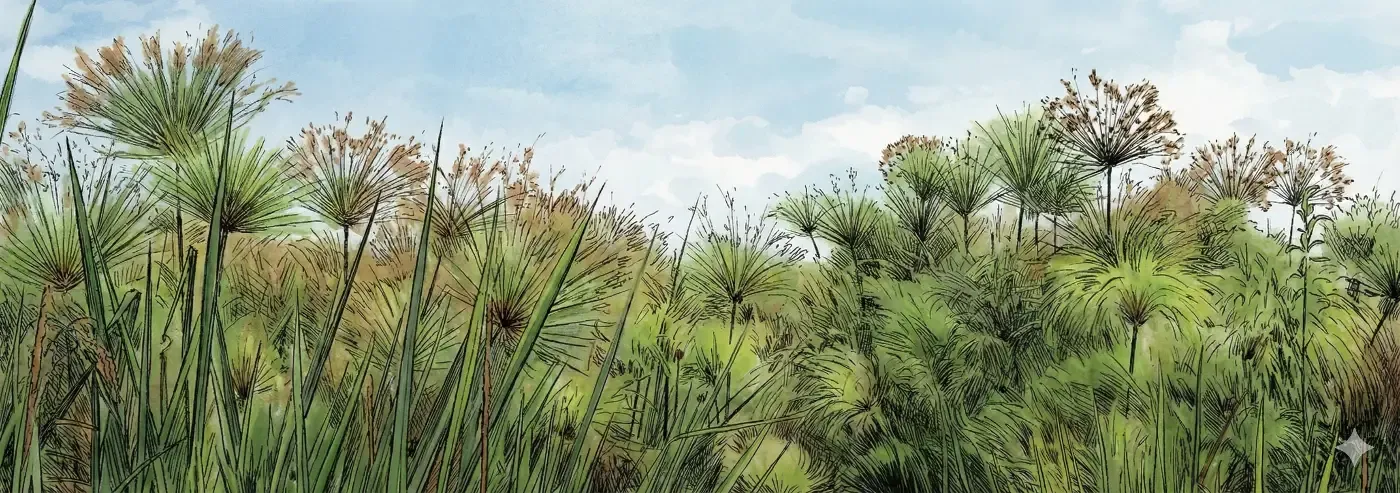
Papyrus (Latin papyrus, Greek πάπυρος) refers both to the swamp plant Cyperus papyrus and to the writing material made from it. The name derives from the ancient Egyptian term pa-per-aa, meaning “that which belongs to the Pharaoh,” already pointing to the high esteem and strict state control over this material. Around 2800 BC, papyrus began to be used in Egypt as a writing surface and developed into the first standardized writing material in world history.
“In my workshops with 6th-grade students, the same fascination always appears: when they hold papyrus strips in their hands for the first time and realize how simple plant fibers can become a writable material, they suddenly understand the inestimable value this material had for the ancient world.”
The Production of Papyrus – A Complex Process
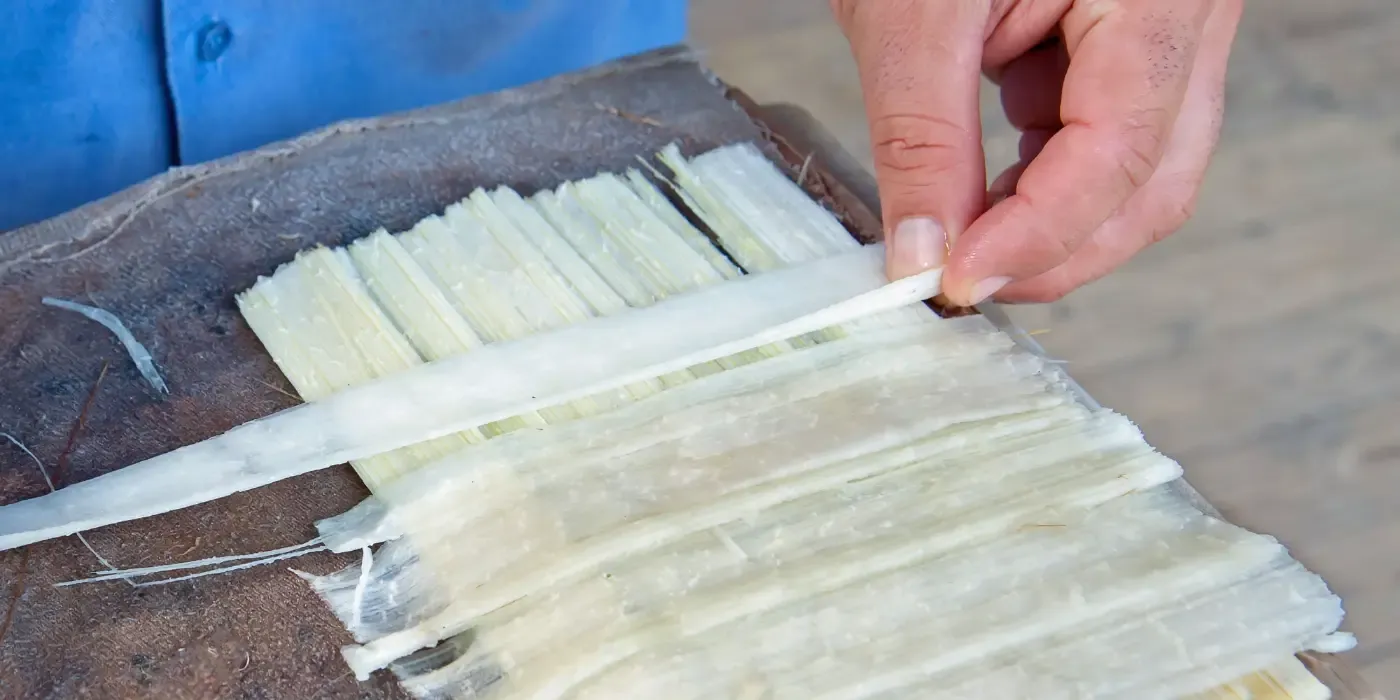
The production of papyrus was a laborious and time-consuming process requiring specialized know-how. The Roman naturalist Pliny the Elder described the method in detail in his Naturalis Historia (XIII, 74–82): the pith of the papyrus stalk was cut into strips up to four centimeters wide, which were laid slightly overlapping. Two layers of these strips, placed crosswise, were pressed and beaten into a firm sheet, held together by the adhesive power of the starchy plant sap.
Quality Levels and Uses
As with modern paper, there were different quality grades of papyrus. The finest sheets were reserved for important documents, while simpler material was used for everyday purposes. The individual sheets were glued together with a special adhesive to form scrolls of varying formats, typically 20 to 25 centimeters wide and up to 40 meters long.
The Golden Age of Papyrus – From Egypt to the Ancient World
The Greeks probably adopted papyrus around 600 BC, and later it was extensively used by the Romans. Both Greek and Roman authors employed the material until about AD 400 for literary texts and for all everyday writings such as letters, contracts, accounting, and even magical texts.
Importance for Education and Culture
The Library of Alexandria, one of the most significant centers of ancient scholarship, is said to have contained between 200,000 and 700,000 papyrus scrolls at its peak. These immense quantities illustrate the central role of papyrus in preserving and transmitting knowledge in the ancient world.
The First Signs of Change – 4th to 6th Century
The shift began in the 4th and 5th centuries AD, when scrolls were largely replaced by the codex—a bound block of parchment or papyrus sheets, essentially the prototype of today’s book. In some cases, the scroll format was still used for literary texts until the 6th century, especially in the Eastern Roman Empire, where the scroll remained a symbol of classical learning.
The Influence of Christianity
Christianity played an important role in this transformation of writing culture, since as a “religion of the book” it required a durable writing material that also met new representational needs for liturgy and illuminated manuscripts. From the 4th century onward, parchment began to replace papyrus as the main writing surface.
The Key Factors Behind Its Disappearance
Technical Weaknesses of the Material
The greatest enemies of fine papyrus fabric were worm damage, moisture, and mechanical stress. Unlike parchment, made from animal skins and far more resistant, papyrus proved vulnerable to deterioration. Nevertheless, recent studies show that papyrus could be quite durable—around AD 200, papyrus scrolls 300 years old were still being read in Roman libraries.
The Arab Conquest of Egypt (AD 641)
The decisive turning point came with the Arab conquest of Egypt in AD 641. When Egypt fell to the Arabs, papyrus became rare even in the Byzantine Empire, as the main production center was no longer accessible. The Arab conquerors gradually transformed Egypt from a Christian to a Muslim society, which also affected traditional papyrus production.
Economic and Logistical Factors
While papyrus had to be imported over long distances from Egypt, parchment could be produced locally and in varying amounts as needed. Although parchment production was labor-intensive, the raw material—animal skins—was available almost everywhere. This made parchment the characteristic writing surface of an agrarian society with limited literacy.
The Long Farewell – 7th to 11th Century
Despite all difficulties, papyrus did not vanish overnight. Until the 9th century AD it was mainly used for private documents and official letters. The papal chancery even used papyrus for charters and cartularies until the 11th century. Documents written on papyrus rolls survive up to the 11th century.
Regional Differences
The replacement process varied greatly by region. From 677 onward, the Merovingian rulers demonstrably used parchment, while the transition in the papal chancery did not begin until 1005 and lasted about half a century. Overall, the shift from papyrus to parchment in Europe stretched over nearly a thousand years—from the beginnings in the 2nd century to the last holdouts in the 12th century.
Parchment – The Successor with Advantages
Parchment offered several decisive advantages over papyrus: it was thinner, stronger, had a smoother surface and a lighter base color. It was also very durable, resistant, and insensitive to moisture, dryness, heat, and cold. Another important aspect was its reusability—old writings could be scraped off so that the precious material could be used again.
| Property | Papyrus | Parchment |
|---|---|---|
| Raw material | Papyrus stalk from Egypt | Animal skins (available everywhere) |
| Durability | Susceptible to moisture and decay | Very resistant |
| Reusability | Limited possible | Easy by scraping |
| Availability | Egypt’s monopoly | Decentralized production |
| Transport routes | Long distances required | Local production possible |
Papyrus in Education and Museum Pedagogy
The history of papyrus offers numerous connections for modern teaching. More than 2400 school projects have already successfully implemented papyrus production in the classroom. Working hands-on with real papyrus strips from Egypt allows students to experience the making of one of the world’s oldest writing materials up close.
Workshops and Practical Experiences
Museums such as the Papyrus Museum of the Austrian National Library offer specially developed workshops in which students can write with reed pens on real papyrus. These programs combine historical learning with practical experience and create lasting understanding of the importance of writing materials in history.
Living History and Reenactment
In the living history scene, papyrus is used for authentic representations of antiquity. Reenactment groups use self-made papyrus for demonstrations of historical writing and thus vividly convey the work of ancient scribes.
Modern Papyrus Research – New Insights Through Digitization
Modern papyrology benefits greatly from technological advances. Artificial intelligence is used to make charred papyrus scrolls from Herculaneum readable. Projects such as the Heidelberg collection with around 11,000 objects systematically study papyri from early Islamic Egypt, providing insights into the transformation from a Christian to a Muslim society.
The Oxyrhynchus Papyri
The extensive collection of the Oxyrhynchus Papyri, with about 400,000 fragments, is being continuously studied. These documents, discovered in an ancient rubbish heap, provide unique insights into everyday life in antiquity and contain many previously unknown works of Greek literature.
Environmental Aspects and Sustainability
Engaging with papyrus production also conveys important environmental aspects. Through the hands-on experience of its laborious production, students develop an awareness of the careful use of resources such as paper. The papyrus plant itself was highly versatile—besides writing material, various parts of the plant were used for building boats, making baskets, mats, and even shoes.
Conclusion – Papyrus as a Key to Understanding Cultural Change
The disappearance of papyrus was not a sudden event but a centuries-long process of transformation, shaped by technical, economic, political, and cultural factors. The Arab conquest of Egypt marked the decisive turning point, while the practical advantages of parchment fostered the long-term shift.
For modern education, the story of papyrus offers many opportunities to illustrate complex historical contexts. The practical making of papyrus allows learners to experience history with all their senses while gaining important insights into resource use, technological change, and cultural transformation.
FAQ – Frequently Asked Questions About the Disappearance of Papyrus
- Why did papyrus disappear at all? – Papyrus disappeared due to a combination of factors: the Arab conquest of Egypt (AD 641) interrupted supply routes, parchment proved more durable and versatile, and decentralized parchment production was less dependent on specific production regions.
- Was papyrus really as fragile as often claimed? – Recent research shows that well-preserved papyrus could last a long time. Around AD 200, papyrus scrolls 300 years old could still be read. The main problems were worm damage, moisture, and physical wear.
- How long did the transition from papyrus to parchment take? – The transition stretched over nearly a millennium, from the beginnings in the 2nd century to the last holdouts in the 12th century. There were major regional differences—some chanceries switched as early as the 7th century, others not until the 11th century.
- Why could Egypt maintain its papyrus monopoly for so long? – The papyrus plant grew only in the swamps of the Nile Delta under special climatic conditions. In addition, the manufacturing process was a closely guarded secret, and the Pharaoh strictly controlled production.
- What role did Christianity play in the disappearance of papyrus? – As a “religion of the book,” Christianity required durable writing materials for liturgical use and elaborate codices. Parchment was better suited for lavish book illumination and was more resistant, which accelerated the transition.
- Were there attempts to cultivate papyrus outside of Egypt? – There were occasional attempts to grow papyrus in other regions, but the special growth conditions of the Egyptian Nile swamps could not be reproduced elsewhere. The Egyptian monopoly therefore remained.
- How can papyrus still be used in teaching today? – Papyrus production is excellent for project-based history lessons, as students can carry out the entire production process themselves. More than 2400 school projects have already successfully implemented this.
- What can we still learn from ancient papyri today? – Preserved papyri such as the Oxyrhynchus collection provide unique insights into daily life in antiquity, from business letters to literary texts. They help us better understand people’s realities of life.
Sources
Status: September 13, 2025 – updated regularly