Beauty Care & Medicine
Care & Healing Arts – how the Romans lived
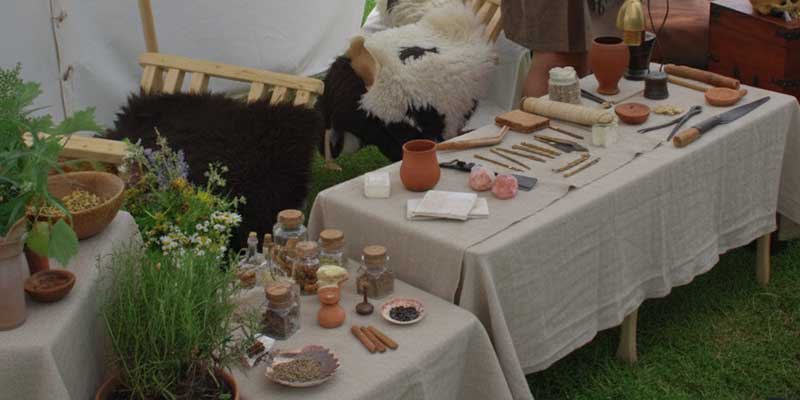
From ointments to scalpels: each piece reflects the everyday knowledge of antiquity. The products combine archaeological accuracy with practical usability.
- Beauty care as in ancient Rome
- Medical instruments based on Roman models
- Suitable for exhibitions & historical projects
- Durable materials for authentic use
Whether in class, at markets or in museums: these objects tell history and create authentic scenes that unite knowledge and experience.
Beauty among the Romans and Roman women
The Greeks and Romans were deeply concerned with what constituted beauty. Ideals emerged about what the ideal body and face should look like. Male beauty was no less important to the Romans and Greeks than female beauty, and there was already a canon of beauty for both sexes in antiquity. For example, a harmonious, well-proportioned body was important for both men and women.
Personal hygiene - not a modern invention
As the Romans became more affluent, their lifestyle changed to one of luxury. In Rome, perfumes were imported from the Middle East, wigs from Germanic slave women, lipsticks and other make-up. Much of what we use today to care for and beautify our bodies was available to the Romans some 2000 years ago. From make-up to curling irons (calamistrum = burning scissors), these are not modern inventions! Criticism of the cult of beauty is not a new phenomenon either. For example, when Roman women came up with the idea of increasing their attractiveness by piercing their ears, Pliny the Elder ridiculed the new-fangled piercing craze: "Moreover, they have introduced the custom of piercing the ears. Apparently it is not enough to wear pearls around the neck, in the hair and on the hands; they must also be put into the body".
Criticism of the body cult
So even in ancient Rome there was a strong cult of the body. And there were also critics, such as the 1st-century writer Valerius Maximus, who denounced the "addiction to grooming". Meanwhile, women were celebrating their success in overturning the lex oppia, a law that had, among other things, restricted the freedom to wear jewellery and against which they had successfully demonstrated. However, the excessive use of cosmetics was viewed with great scepticism by some Romans, as cosmetics were part of medicine in ancient times. The Roman physician Galen of Pergamon founded the scientific branch of pharmaceutical and cosmetic preparation. Popular forms of personal grooming included shaving, depilation and the traditional hair ornaments worn by Roman women. The Romans also used ointments and oils to keep their skin supple. Many recipes for skin care have survived. The upper classes in particular went to great lengths to prepare and apply face masks, baths and ointments.
Manuals disseminated tips and recipes for beauty care. Ovid, for example, recommended an ointment made from barley and wheat flour, eggs, ground pulses and deer antlers, resins, narcissus bulbs, honey and gum.
Youth craze even then
Most importantly, anyone who wanted to be beautiful in ancient Rome had to radiate youth. Signs of age and decay were covered up with a variety of cosmetics, creams, hair dyes, wigs and other items.
Lucian of Samosata scoffed in the 2nd century:
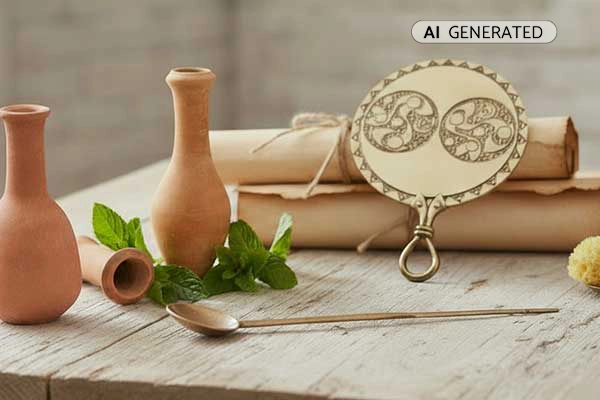
"Whoever saw women getting out of bed in the morning would find them uglier than monkeys. That is why they carefully lock themselves up at home and are not visible to any male being [...] These women do not wash away their sleepiness with a shower of fresh water and then set about serious work, no, powders of various compositions must lighten the unpleasant colour of their faces [...] There are silver shadows on their faces. ...] There are silver bowls, jugs, mirrors, a multitude of jars like in a chemist's shop, jars full of all sorts of hopeless things in which toothpastes or eyelid blackeners are kept".
Donkey's milk for beauty, or for those who want to be beautiful...
Pliny the Elder (23 - 79) passed on a number of beauty tips.
For example, Roman women used donkey's milk to combat wrinkles: "Donkey's milk is said to remove wrinkles from the face and make it soft and white. Some women applied it to their faces seven times a day. Poppea, the wife of Emperor Nero, started this fashion; she also put donkey's milk in her bath water, so she always took her herd of donkeys with her when she travelled".
Advice against pimples: "Pimples can be removed by rubbing them with butter mixed with lead. "
For ulcers on the face: "Ulcers on the face are treated with the still warm placenta of a cow."
For lichens on the face: "A paste made from the genitals of calves is dissolved in vinegar and sulphur and mixed with the branch of a fig tree; apply twice a day."
(From: Liberati, A. M. & Bourbon, F. (1996). Rome. Ancient World Empire, p. 89.)
Ancient hairlessness
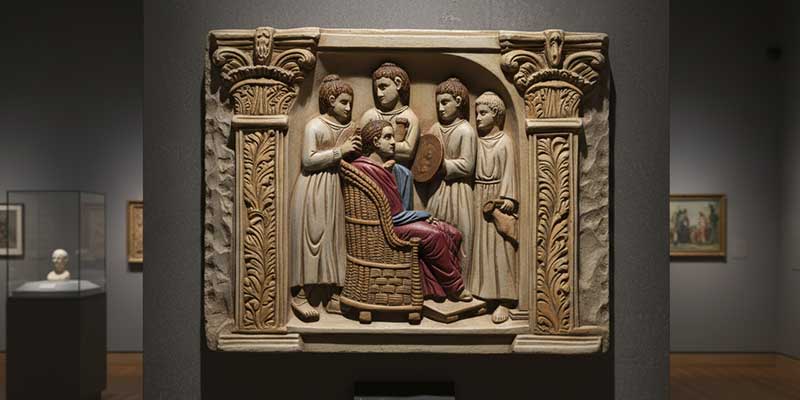
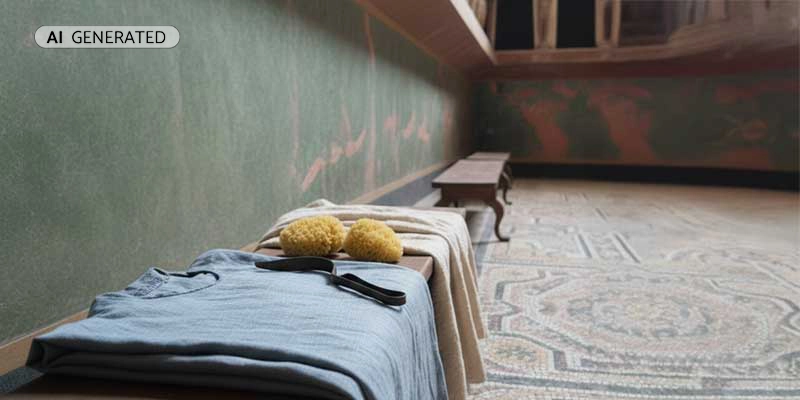
Any kind of body hair was considered unaesthetic - not only in women, but also in men. A hairy body was considered barbaric. The Romans used tweezers and creams to remove body hair. In the thermal baths, men had slaves pluck out each hair with tweezers in lengthy procedures. Before this unpleasant treatment, the Romans took various baths with perfumes of lilies, narcissus, roses, iris, cardamom or musk to relax and soften the skin.
No hair, but not everywhere
The trend towards hairlessness has a long tradition and was considered the ideal of beauty for half a millennium. Hair on the head was a different matter! Elaborate hairstyles contributed greatly to female attractiveness, and many poets praised luxuriant hair as a sign of beauty. Hairstyles changed over time, depending on the age and social status of the Roman woman. But one thing was always true: a woman had to wear her hair long. Roman women used a variety of combs, hairpins and conditioners to create elaborate hairstyles. Ribbons, nets, wigs and hairpieces were used to make the hair look more voluminous. Dying and bleaching was also a secondary trend. Copper-blonde hair was particularly popular with Roman women, as it was with Germanic women.
Tinctures and ointments, dyes and the like.
And it's true: women in the Roman Empire spent a lot of time making make-up and face masks from a variety of ingredients. The cosmetics were mixed in small bowls and dishes. The basic ingredient was lead powder, which gave the skin its coveted pale complexion. White lead is highly toxic and can cause serious long-term skin damage, but this was not known in ancient times. They mixed the lead with honey and various fatty substances. To give the cream a reddish hue (to colour the lips), Roman women added red ochre or saltpetre to the mixture. The lips were also coloured with a precious dye made from the stinking mucus of the purple snail (a sea snail). To make the skin shine, crushed blue-grey haematite (iron ore) was sprinkled on the face. Soot was used to colour eyelashes and eyebrows to emphasise their contours. Eye shadow was also used at this time: Women applied green or blue colour to their eyelids. A little rouge made the cheeks look rosy. A kind of nail varnish was also known. Roman women liked to paint their fingernails in shades of red. From white powdered skin to blue or green eye shadow to red lips and fingernails... The ideal of feminine beauty in ancient Rome had little to do with naturalness.