Ancient Basics – Leather, Bone & Cork
Simple raw materials, great significance
Simple materials, great impact: In everyday Roman life, leather, bone, and cork were indispensable. They stood for practical solutions and still tell fascinating stories from life in antiquity.
- Authentic replicas based on Roman originals
- Perfect for schools & museums – bringing lessons to life
- Authentic craftsmanship for living history projects
- Historically accurate and ready for immediate use
Whether in the classroom or the museum – these products make history visible and tangible.
Leather - a wonder material then and now!
Leather was a very popular material in ancient and medieval times, and even in prehistoric times, i.e. the Stone Age and probably beyond. Along with wood, stone and bone, this tough and versatile material may even be one of the oldest materials deliberately used and extracted by humans. Although it is difficult to prove the existence of early tanning processes, there are clear signs that our ancestors were able to hunt game effectively and make leather from their hides during the Ice Age and earlier. All in all, we should get away from the misconception that Stone Age people only wore skins that were crudely stitched together. It is much more likely that they were already capable of making and wearing beautiful garments from tanned leather. Skins and the like were probably only used in winter as extra protection against the cold.
All this makes leather not only a true all-rounder, but also a material that literally breathes history from every pore. This makes it all the more important for history buffs to get to grips with this natural wonder material and not just buy off the peg.
Leather is for everyone!
Of course, beginners will find it a little more difficult to work with leather than people who are already experienced in the field, but basically everyone can do something with leather. However, beginners should make sure that they buy a bit more material... just in case something goes wrong. But as practice makes perfect, that extra piece of leather shouldn't break your crown. It can also be very helpful to read up on the material in advance or ask a trusted person for help. Experienced reenactors and LARP enthusiasts are often good sources of information and have a wealth of knowledge. It can also help to have a clear idea of what you want to make. If you want to make shoes, you will need different types of leather than if you want to make a bag. If you just want to write, parchment will do. However, it should be clear to everyone that you cannot make clothes from parchment.
You can also use dyed leather cords to spice up your authentic antique or medieval clothing. Do not fall into the trap of thinking that everything was white in antiquity. Absolutely not! In fact, the ancient world was very colourful and bright. That's why you can be a bit experimental when buying dyed leather goods and try colours and shades that you normally avoid. The motto here is: Si libet licet - what you like is allowed.
All in all, it can be said at this point that anyone, but really anyone, who is looking for the absolute camp feeling and really wants to feel as if they have arrived in another era, will need a certain amount of rawhide. Even if it's just a few sheets of parchment and some string. It is important to develop a feel for this material so that you understand what it means to be at home in antiquity.
Which leather product suits me?
This is of course a very difficult question to answer in general terms, but you should be aware that basically any type of leather will suit any person. All you have to do is try. It can be very useful to think a priori about which era and class you want to represent. After all, not everyone could afford everything. Just like today. If you're going to be a craftsman or a simple merchant, make sure you don't dress up with too much leather. It may look nicer than its coarser counterpart, but it will ruin the overall effect.
Another important factor, as already mentioned, is the period you are portraying. Sure, leather itself has not changed over the millennia, but its use has. That's why it can be crucial to the success of an authentic journey through time to buy not only the leather you like, but also the one that matches the era you want to represent. Brightly coloured leather is best suited to the ancient world. If you feel more at home in the Middle Ages, stick to natural colours... unless you are portraying a rich nobleman. Then anything goes. Because then, as now, the upper classes were not stingy and liked to show off their wealth with pompous and colourful clothes.
Don't hesitate - just grab it!
Sooner or later, every LARP enthusiast or reenactor will have to deal with leather if they want to fully immerse themselves in their role and create a particularly high level of immersion. So don't think about it too long, just buy it and let yourself be surprised by what is possible. Leather is also an unusual and therefore special idea as a gift for the fickle.
A protection for the human body, a very robust and at the same time malleable material for utensils and furniture - that is and has always been leather. Leather making is one of the oldest crafts in human culture. Archaeological evidence shows that, as early as 100,000 years ago, animal skins in various parts of the world were deliberately treated to make them both durable and supple. On these pages of the Roman Shop, you will also find animal skins and leather, as well as leather goods based on antique models, in the Raw Materials and Utilities category.
A Roman becomes the patron saint of tanners
Even the Roman military used a lot of leather in its equipment - soldiers' shoes were made of leather and leather caps were part of the uniform. Legend has it that a Roman still has a special significance for shoemakers and tanners today: Legend has it that Krispin, the son of a noble Roman family who lived around 300 AD, learned the shoemaker's trade and then made shoes for the poor free of charge. He converted them to Christianity - for which he was eventually beheaded. As a martyr, he is still considered the patron saint of tanners and shoemakers!
Shoemakers were already making great leather sandals for the Romans!
Roman leather shoes
The comfortable Roman leather walking shoes in the Raw Materials and Utilities section of the Roman Shop are made from naturally treated, vegetatively tanned, very strong cowhide. They are available in various sizes. The Roman shoes, handmade according to a genuine antique pattern, offer a light and comfortable walking experience. The Roman shoes are made by hand and are made of leather all around, so they fit your foot perfectly and feel like a second skin. So you can walk lightly through the summer! Almost as if you were always barefoot!
Parchment an animal experience!
Parchment is an animal delight! Writing on real goat or sheep skin is not only a special writing experience - especially for antique fans - but also a lasting affair for fancy occasions. The animal skins are decorative, rustic and impressive - but in everyday life they also serve as a smart protective cover for the binding of beloved books.
Antique membrana in the Roman shop
In Roman times, animal skin writing material was called membrana. The term parchment does not appear until late antiquity. Parchment first appeared after papyrus in the 4th century AD and soon replaced vegetable writing material as 'natural paper'. This was because parchment could be produced locally everywhere and was therefore not dependent on papyrus, which was only available in a few regions of the world, such as North Africa and Syria. Parchment found its way into the book trade, partly because it was easier to correct what had been written by "scraping off" the ink than by writing on a sheet of papyrus.
The antique skins on these pages in the Raw Materials and Utilities section of the Roman Shop are traditionally tanned and of the highest writing quality. Each parchment is a unique natural product and therefore always a little unique! Convince yourself of the antique writing material. You will have a lot of fun! And perhaps you will also take a look at the Roman Shop pages under the other categories related to writing in antiquity and find more treasures from the ancient culture of writing! Have a good time!
Bones
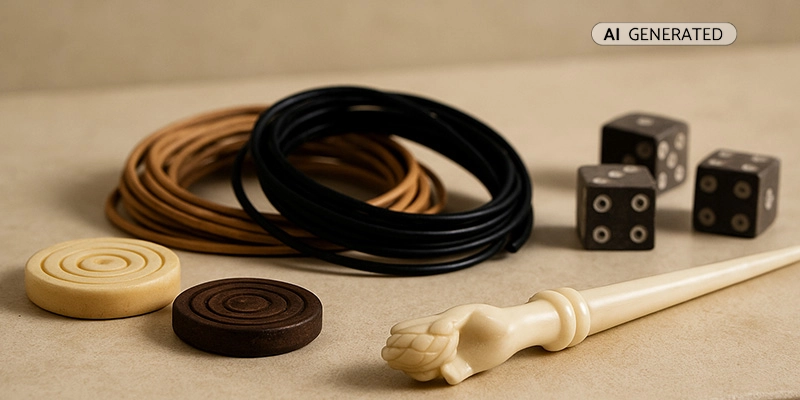
In Roman times, the Romans wrote on wax tablets to make notes or to write a message or a letter. The Romans used something called a stilus, Latin for stylus, to carve into the wax of the tablets. The pointed Roman writing implement was usually made of very hard, strong materials such as iron, bronze, ivory, but also bone and, for wealthy Romans, silver or even gold. On these pages of the Roman Shop you will find two wonderful, handmade Stilus made of bone in the category Raw Materials and Useful Items. The two wax tablet pens, based on real models from Roman antiquity, are carved and polished from bone. They have a very fine and smooth surface. The length of the bone pens on these pages of the Roman Shop, in the category Raw Materials and Utilities under the heading Bone, is about 13 centimetres. They have either a pointed or a narrow end and are extremely sturdy.
Decorative bone box - lovingly recreated
On these pages of the Roman Shop, under the category of Raw Materials and Utensils, you will also find a very decorative little bone box, which is also based on the Roman original. It is a hand-made bone box with a sliding lid. The box is made from bone slabs and is based on an original found in France. The surfaces are exquisitely crafted and the bone box feels wonderfully flattering in the hand. Use it for jewellery or pens, hairpins or cufflinks, on your office desk or on your hallstand for keys that are otherwise lying around... The finely polished jewellery box looks good anywhere and is a real one-off! By the way, this type of box was also used in ancient times as a storage box for small utensils or jewellery. The Roman Bone Box is therefore an authentic antique decorative item for treasures - or a gift for precious people!
Or would you prefer a box made of bone slabs?
Also an antique eye-catcher and flatterer of the hand is the small bone box with round eyes, modelled on the antique example! Handmade from bone slabs, this box is intricately decorated with Roman round eyes, echoing the ornamentation of a find from France. The surface is finely polished and the lid is screwed on. Bone boxes of this type were used by the Romans in antiquity as storage boxes for all sorts of small objects - this is also a real piece of jewellery and would make a lovely gift for someone special.
Roman dice made of bone
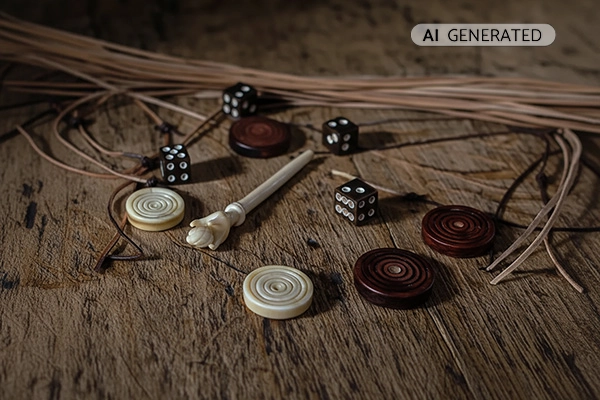
Here are the ancient Roman dice! Traditionally, the dice used by the Romans for their favourite pastime were made of bone. What a wonderful, authentic sound when the little jewels roll across the table! In fact, bone dice were very common in Roman times, and were even manipulated to improve 'luck'. The antique Roman dice you can find in the Roman Shop in the Raw Materials and Utilities section are also handmade and faithful replicas of real Roman bone dice - but of course they are not trimmed for luck! The dice are made from real bone and decorated by hand with circular eyes. The dice eyes are milled in the workshop with a hand-made circular-eye drill, so each one is a unique specimen, ground and polished, ready for use in the ancient Roman game of dice!